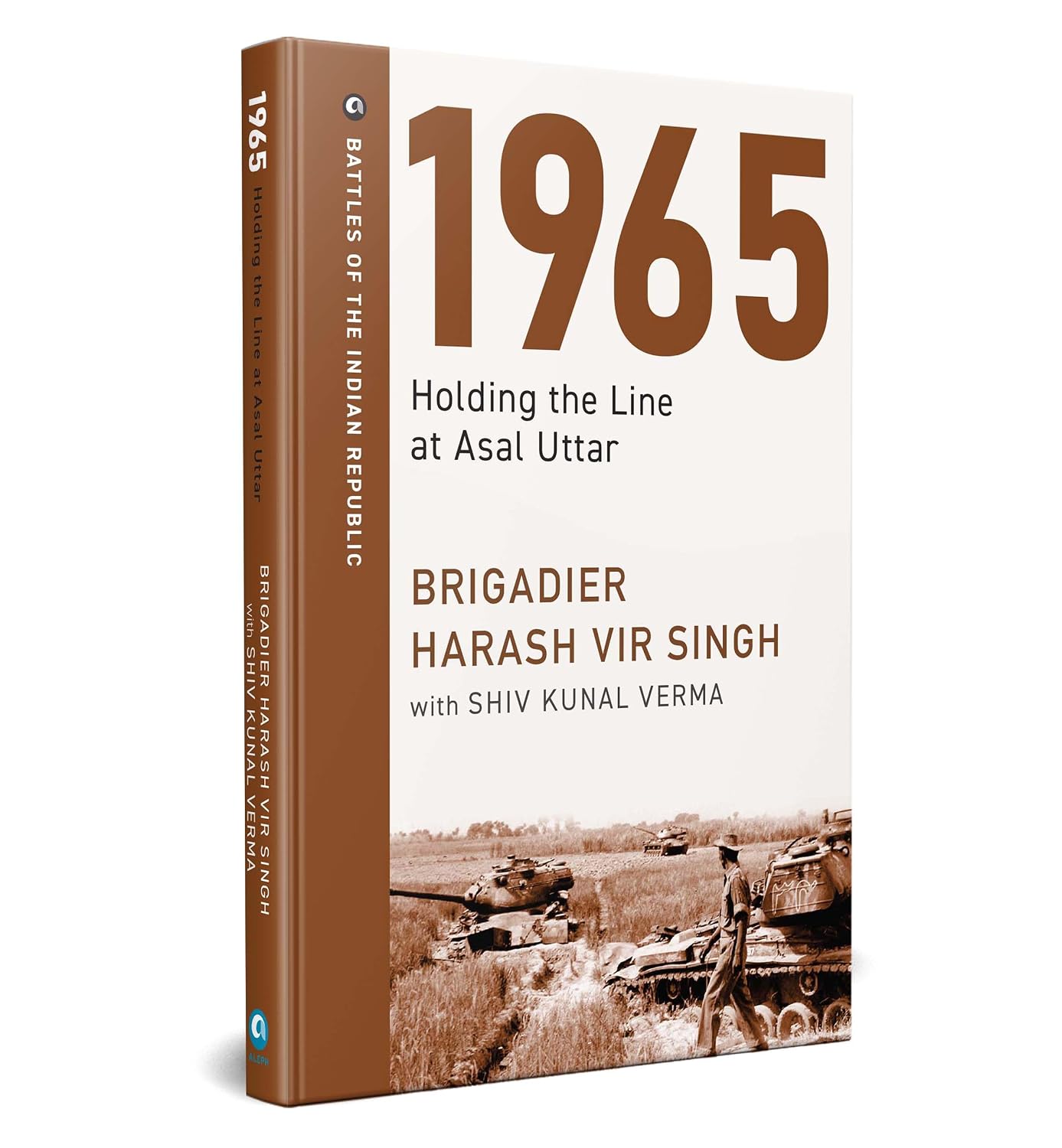
During the 1965 war, around the flat fields and irrigation canals of Khemkaran town, dust rose in clouds and the horizon appeared deceptively open. It was in this daunting landscape that India attempted to advance on 6 September, and was met with fierce resistance by Pakistani artillery. Indian units were forced to pull back, regroup, and choose their ground. That ground was Asal
Uttar, meaning true north.
The line that formed there did not possess depth in the classical sense. In fact, it was a thin line composed of tired men who dug their heels in and refused to look over their shoulders. But had it broken under sustained pressure, the defence of the Punjab plains would have become nearly impossible.
The Indian crews’ Sherman tanks were going up against the Pakistani Army’s M47 and M48 Patton tanks, which had an evident technological advantage. 1965: Holding the Line at Asal Uttar describes how the Indian forces repelled Pakistan’s modern armoured division that had arrived with confidence, numbers, and a belief in its own invincibility.
The book is a meticulously detailed account of the battle by Brigadier Harash Vir Singh of Deccan Horse, one of the oldest and most storied cavalry regiments of the Indian Army. Constructed using restrained, dignified recollections from veterans, it records a crucial episode of India’s military history that holds many lessons for the ages to come.